


5 min read

Imagine extending a $500,000 loan, getting a signed security agreement, filing your UCC-1, and even recording a deed of trust on real property. You did everything right. And then a court hands every dollar to the other creditor anyway.
That's exactly what happened to the Shumard Foundation in a February 2026 West Virginia appellate court decision. The lesson? In a priority dispute between two secured creditors, the winner is almost always the one who filed first. Not the one with the most paperwork. Not the one with the biggest loan. The one who filed first.
What Is the "First to File or Perfect" Rule?
Under Article 9 of the Uniform Commercial Code (UCC), when two creditors have competing perfected security interests in the same collateral, priority goes to whoever filed their UCC-1 Financing Statement first.
How does UCC Article 9 Priority Work?
Think of it like staking a claim. The moment you file a UCC-1, you are planting your flag in that collateral. Anyone who files after you is behind you in line. And if there is not enough collateral to go around, the people at the back of the line can end up with nothing.
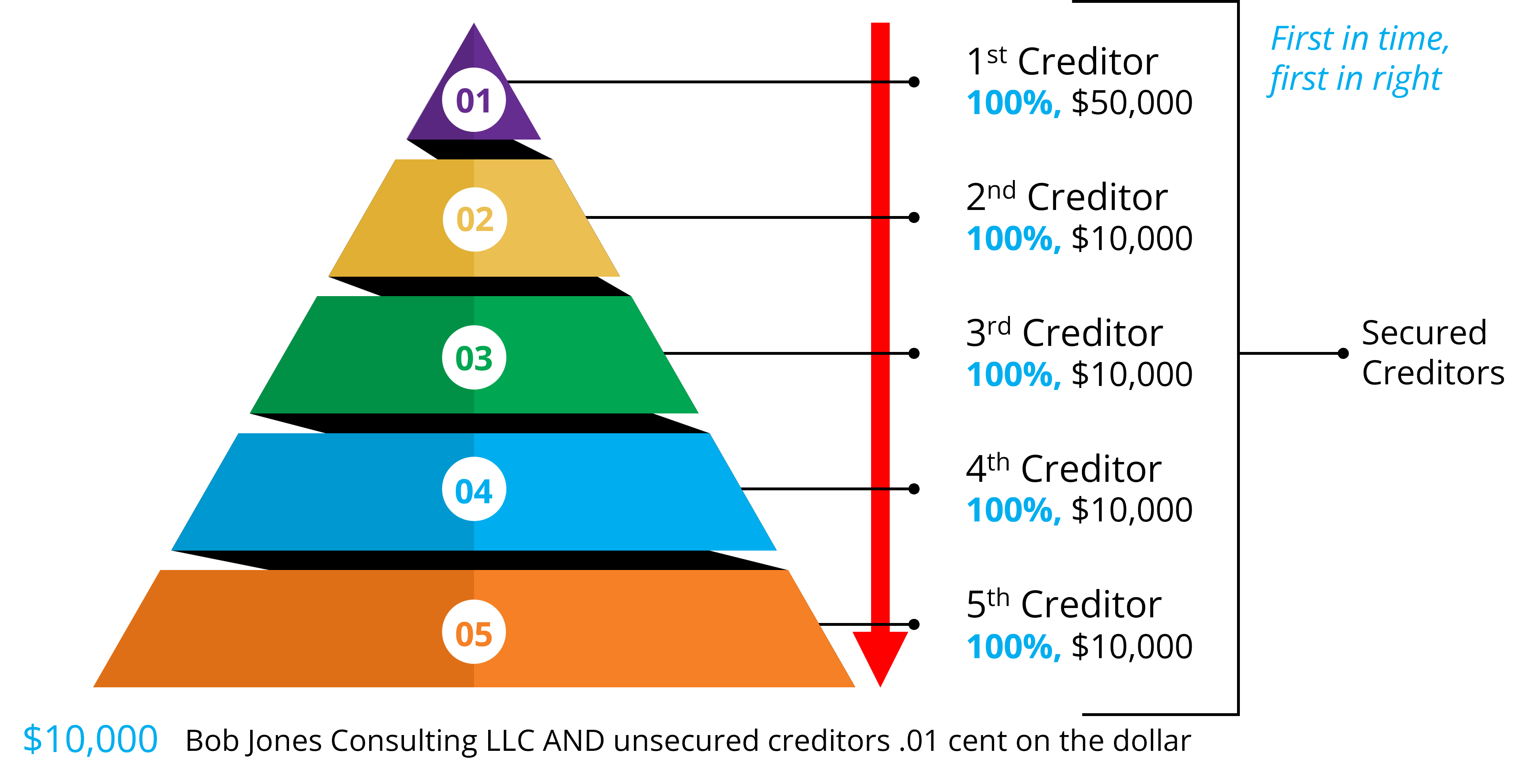
What Article 9 Says and How Priority Protects Payment
This rule is codified at UCC Section 9-322(a)(1), which states that conflicting perfected security interests rank according to priority in time of filing or perfection. It is one of the most fundamental principles in commercial credit, and it plays out in court more often than you might think.
Not sure how a UCC-1 works? Start here with our UCC filing basics.
What Is Section 9-513 of the UCC?
Under UCC Section 9-315, a perfected security interest continues in the identifiable proceeds of collateral.
So even if a debtor sells, refinances, or otherwise converts the collateral you are secured in, the senior lienholder's claim moves with it. You cannot eliminate a prior lien simply by paying off or restructuring the underlying asset.
A Real-World Example: Shumard Foundation v. UMB Bank (2026)
Ohio Valley University (OVU) had a $750,000 promissory note owed to it by a third party, Parkersburg Powell Limited Partnership (PPLP). That note was a receivable -- money OVU was entitled to collect.
Back in 2007, OVU pledged its receivables to UMB Bank as collateral under a large bond financing arrangement. UMB filed its UCC-1 in September 2007. Years passed, OVU struggled financially, and eventually defaulted on its obligations to UMB.
In April 2021, OVU needed cash fast. It borrowed $500,000 from the Shumard Foundation and pledged the PPLP note as collateral. Shumard filed its UCC-1 in May 2021 and even obtained a recorded assignment of the deed of trust on the real property securing the note. On paper, Shumard looked well-protected.
But UMB had already been there since 2007.
OVU filed for bankruptcy in early 2022 and ceased operations. When the PPLP note was paid off, it generated about $590,000 in proceeds. Both UMB and Shumard claimed those funds. The court sided with UMB because UMB filed first, more than 14 years earlier.
Shumard walked away with nothing.
Why Shumard Lost (And What It Tried to Argue)
Shumard raised several arguments. Understanding why they failed is useful for anyone extending credit secured by receivables or promissory notes.
"The note had an anti-assignment clause"
The PPLP note included language stating it could not be assigned without consent of the maker. Shumard argued this made the note unusual enough that it should not be classified as an "instrument" under the UCC, which would have changed the priority analysis.
The court didn’t buy it. The UCC definition of "instrument" is broadly inclusive, and the presence of an anti-assignment clause does not change the fundamental nature of a promissory note or remove it from Article 9's reach.
Takeaway for credit teams: Restrictive language in a note does not change how it is treated under the UCC. When you are taking a security interest in a promissory note, Article 9 governs priority.
"We had the deed of trust, so real property law should apply"
Because OVU had assigned the PPLP deed of trust to Shumard, and Shumard had recorded that assignment, Shumard argued it should be treated as the holder of a real property interest governed by recording acts, not the UCC.
The court rejected this too. The deed of trust was simply security for repayment of the note. Once the note was paid off, the deed of trust was released. The real dispute was over who had priority in the note itself, and that is a personal property question governed by the UCC.
Takeaway for credit teams: A recorded real property interest does not override UCC priority when the core collateral is a promissory note or receivable.
"UMB's 2007 filing should have lapsed"
Standard UCC-1 Financing Statements are effective for five years and must be renewed with a continuation statement before they expire. But there is an important exception: in West Virginia, UCC-1 filings made in connection with public finance transactions are effective for 40 years.
UMB's 2007 filing was part of a public bond financing arrangement. It was still fully effective in 2021. UMB also filed a second UCC-1 in 2019, adding another five-year window on top of that.
Takeaway for credit teams: When searching for prior UCC filings on a debtor, do not assume old filings have expired. A filing from 15 or 20 years ago could still be active, especially in transactions involving public finance or municipal entities.
Remember The Proceeds Rule?
When the PPLP note was paid off and converted into cash held in escrow, UMB's priority automatically attached to those proceeds. Under UCC Section 9-315, a perfected security interest continues in the identifiable proceeds of collateral.
What This Means for Your Credit Team
Whether you are a CFO, credit manager, or analyst reviewing a collateral package, the takeaways from this case are practical and direct.
Before extending credit secured by receivables or promissory notes:
- Run a thorough UCC search on the debtor before closing, not just in the state of incorporation, but wherever they do business
- Do not assume old filings have lapsed; check the filing date and the type of transaction
- Understand that real property interests do not automatically override UCC priority when the core collateral is a note or receivable
- File your own UCC-1 as early as possible; your priority date is the date you file, not the date you close the deal
A thorough UCC search before closing is not just due diligence. It is the difference between being first in line and walking away empty-handed.


Colorado's New Lien Law: What it Means for Construction
Colorado's excessive mechanic's lien penalty just changed under SB26-074, with a good-faith safe harbor and new rules on disputed and delay costs.
How UCC Name Errors Become Bankruptcy Risk
Real world example: How a Texas bankruptcy court voided a $500,000 security interest in 2026 because of a single word error in the debtor's name. Here's what creditors need to know.

Do Mechanic’s Liens Expire? What Happens After
Understand the importance of enforcing your mechanic's lien claim. Learn about deadlines, suit processes, and how to protect your rights effectively.