


6 min read
How to Read the Lien Index
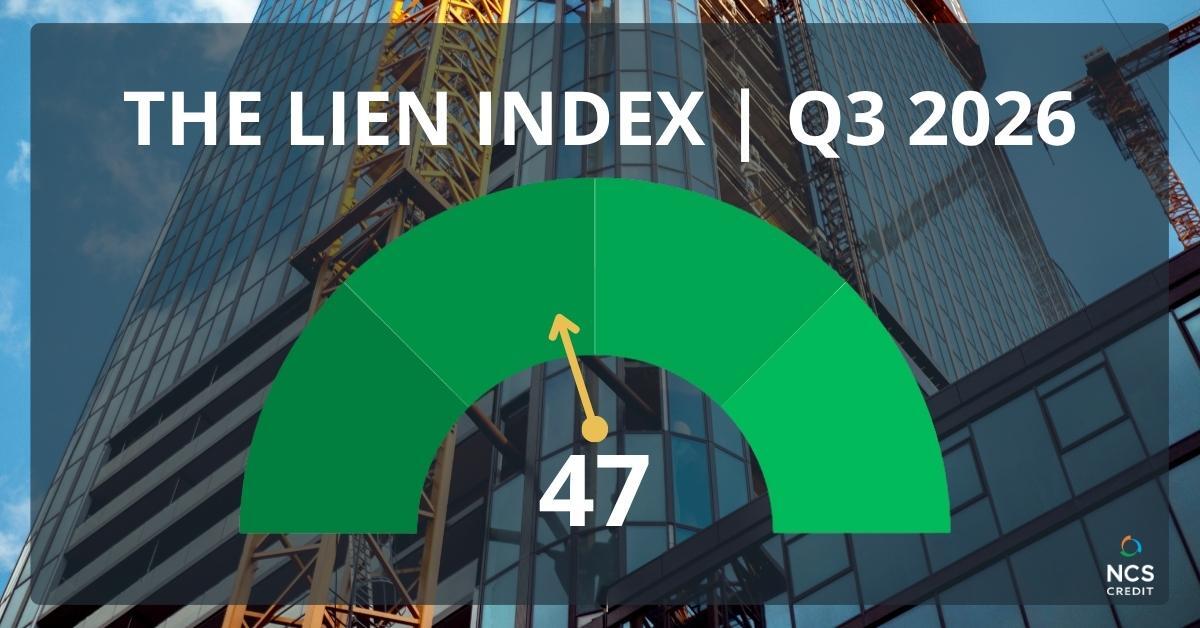
The NCS Credit Lien Index measures trends in mechanic's lien activity across the U.S. construction industry. A higher Index score reflects increased lien filing activity, a signal of payment stress, disputes, and financial strain across the construction supply chain. A lower score indicates decreased filing activity, which may reflect improved payment conditions, fewer projects reaching lien-triggering stages, or both.
- 0–100 Scale: 50 is the neutral benchmark
- Above 50: Increased mechanic's lien filing activity, often associated with payment disputes and elevated credit risk
- Below 50: Decreased filing activity, which may reflect fewer active projects or easing payment pressure
- A note on the data: Because mechanic's liens are filed later in the construction lifecycle, the Index reflects upstream project trends. Recording offices nationwide manage ongoing backlogs of filings, and the Index is adjusted and revised as that data becomes more complete.
National Mechanic's Lien Activity
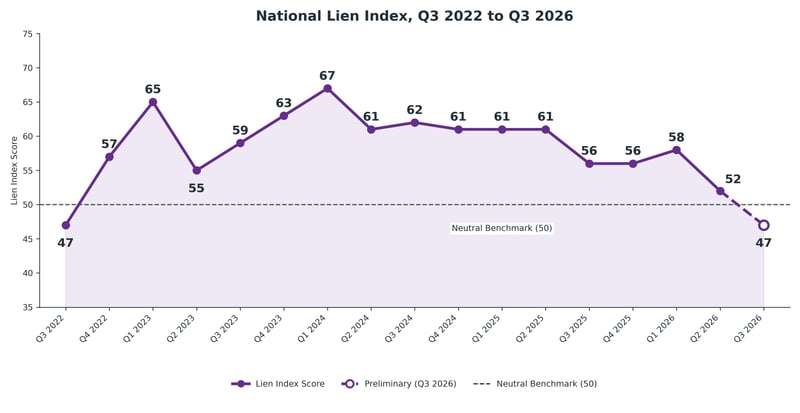
The Lien Index fell to 47 in Q3 2026, matching the Q3 2022 low and sitting below the neutral benchmark of 50. That's a 10% decrease from Q2's revised score of 52 and a 16% drop from Q3 2025, when the Index stood at 56.
Q2 followed the familiar revision pattern. It was first published at 48 and later revised to 52*, and Q3's preliminary score will likely rise as well (see How to Read the Lien Index above). This time, though, the revision didn't erase the decline. Even after revising upward, Q2 landed below the 56 to 61 range the Index held from early 2025 through Q1 2026.
Put together, the Index has now declined for two straight quarters, from 58 in Q1 to 52 in Q2 to 47 in Q3. A lower score means fewer liens are being recorded. It doesn't explain why, and the reasons matter more than the number this quarter.
Regional Mechanic's Lien Activity
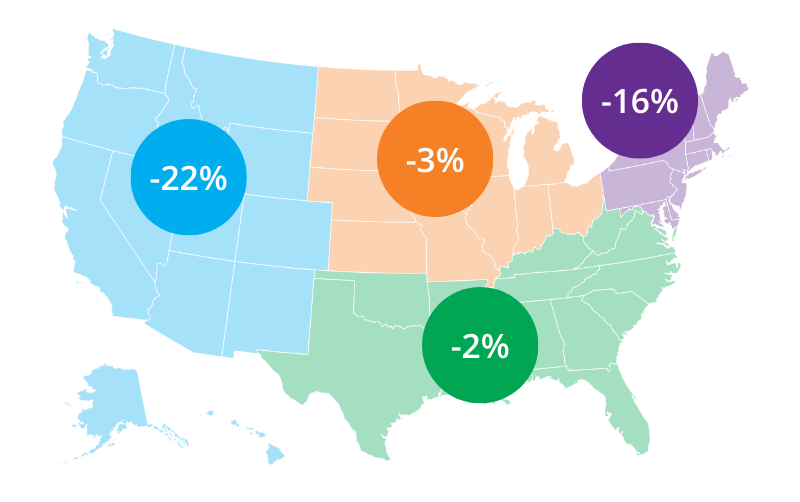
- South: 60, down 2% from a revised Q2 score of 61
- West: 38, down 22% from a revised Q2 score of 49
- Northeast: 42, down 16% from a revised Q2 score of 50
- Midwest: 32, down 3% from a revised Q2 score of 33
The regional picture reversed from last quarter. Once revised data came in, the West and Northeast were close to flat in Q2. This quarter they posted the steepest declines of any region. The West fell to 38, its lowest reading since Q2 2022. The Northeast dropped to 42, its lowest reading in data going back to 2018, and its 29% year-over-year decline is the largest of the four regions. The South and Midwest held near their Q2 levels. The Midwest's 32 is its lowest score since Q3 2021, while lien activity in the South remains elevated at 60, the only region still above the neutral benchmark.
States with Highest Mechanic's Lien Activity
The top 5 states for lien activity were (in order of volume): Texas, Florida, California, Georgia, and Nevada
Top 3 States by Region
- South: Texas, Florida, Georgia
- West: California, Nevada, Colorado
- Midwest: Ohio, Iowa, Illinois
- Northeast: New York, Massachusetts, New Jersey
Looking Forward
The leading indicators spent the third quarter moving sideways at weak levels. The AIA/Deltek Architecture Billings Index went from 47.3 in June to 46.6 in July and 47.2 in August, still below the 50-point line that separates growing billings from shrinking ones. AIA describes the downturn as stretching back nearly three and a half years. Associated Builders and Contractors reported that its Construction Backlog Indicator dropped to 8.0 months in July, its lowest reading since January, then recovered to 8.5 months in August, level with a year earlier. The Dodge Momentum Index was first reported up 6.9% in July, but Dodge later revised both July and August downward. On the revised figures, the index slipped to 281.3 in August, then rose 2.4% in September to 288.0. September readings from AIA and ABC were not yet published at the time of writing.
Take data centers out of the picture and the numbers get weaker. In July, the 88% of ABC contractors with no data center work averaged 7.5 months of backlog, compared with 11.4 months for the 12% with it. The gap narrowed in August, but ABC attributed that to more contractors winning data center work, not to a broader recovery. Dodge's numbers point the same way. Its September gain came from institutional planning, while the commercial portion of the index was down 3.0% from a year earlier and would have been down 14.9% without data centers. Architecture billings also show where the softness is landing. AIA reported Northeast architecture billings at their lowest level since 2020 in August, and the Northeast's Lien Index score is its lowest in data going back to 2018.
Small business bankruptcies kept climbing through the quarter. Epiq AACER reported Subchapter V elections up 24% year over year in July, 63% in August, and 38% in September, bringing the total through September to 2,442, up 46% from the first nine months of 2025. Commercial Chapter 11 filings were up 11% over the same nine months, though July and September comparisons were skewed by large multi-entity bankruptcies in the prior year. Subchapter V is the restructuring option built for small businesses, a group that can include subcontractors and suppliers who depend on getting paid on time. Eligibility may also widen. Congress has passed a bill that would permanently restore the Subchapter V debt limit to $7.5 million, up from the current limit of about $3.4 million, and sent it to the president for signature. If it becomes law, more construction businesses would qualify for Subchapter V, which matters to any creditor whose customer files.
Costs and borrowing both moved against contractors this quarter. According to the Associated General Contractors of America, the producer price index for inputs to new nonresidential construction rose 8.9% from August 2025 to August 2026, led by petroleum products and tariffed metals. The producer price index for diesel fuel jumped 77.8%. Energy prices climbed further. The Brent crude oil spot price averaged $114 a barrel in September, up from $91 in August, according to U.S. Energy Information Administration data, after attacks on oil infrastructure and tankers in the Middle East disrupted supply. In AGC's latest survey, more than half of contractors reported projects canceled, postponed, or scaled back in the past six months, and about a third of respondents attributed the disruptions to rising costs. On September 16, the Federal Reserve raised its benchmark rate by a quarter point to a range of 3.75% to 4%, its first increase since 2023, citing elevated inflation, and officials' projections pointed to another increase this year. For construction, that means higher financing costs on projects that were already hard to make work.
The Bottom Line
Liens are a lagging signal. They're filed after a payment has already gone wrong, so a lower count reflects problems that have already surfaced, not the ones still building. This quarter, the forward-looking signals moved the other way: small business bankruptcy filings were up 46% through September, construction input costs were up nearly 9% from a year ago, and the Federal Reserve raised rates for the first time since 2023. A quieter quarter for liens isn't a reason to loosen credit terms. Serve preliminary notices and secure mechanic's liens and bond claims on every construction project. File UCCs on every customer with an open line of credit.
Industry Experts
The AIA/Deltek Architecture Billings Index (ABI) rose slightly to 47.2 in August from 46.6 in July, but the overall direction stayed negative. AIA Chief Economist Richard Branch said, "Architecture firms are caught between stubborn inflation and higher borrowing costs." Inquiries into new projects showed modest growth, at 50.8, while the value of newly signed design contracts kept shrinking, at 48.3. Firm leaders are also more cautious: the share expecting billings to decline in the coming quarter rose from 21% at the end of Q1 to 29% at the end of Q3. Regionally, Midwest firms reported their first growth in nearly a year, while billings at Western firms were essentially flat.
Associated Builders and Contractors (ABC) reported backlog rebounding to 8.5 months in August after a sharp drop in July, when every industry, region, and company size saw backlog decline. Chief Economist Anirban Basu said, "Data centers continue to keep contractors busy even as activity softens in other segments." About 1 in 6 ABC members is now under contract on a data center project, the highest share on record. Confidence readings for sales and profit margins rose in August while staffing fell, with 12.3% of contractors planning to cut headcount over the next six months, the most since December.
Dodge Construction Network reported the Dodge Momentum Index up 2.4% in September to 288.0, from a downwardly revised August reading of 281.3. Institutional planning grew 9.4% for the month, led by education, healthcare, and government buildings, while commercial planning fell 1.3% as slower data center and warehouse planning outweighed gains in retail, hotels, and offices. That followed a nearly flat August, when Sarah Martin, Director of Economic Research at Dodge, said "weaker data center planning predominantly drove the flatter trend." July was first reported at 291.7 and later revised to 283.0.
Epiq AACER reported 2,442 Subchapter V elections through the first nine months of 2026, up 46% from the same period in 2025. Michael Hunter, Vice President of Epiq AACER, said, "As cost pressures mount, more small businesses are turning to Subchapter V to reorganize." Monthly elections reached 302 in August, up 63% year over year, and were 276 in September, up 38%. Commercial Chapter 11 filings were up 11% for the year through September.
*Nationwide, recording offices manage a backlog of requests. The Index data is adjusted and revised accordingly. The Q2 2026 Lien Index score was revised from 48 to 52 as additional filing data became available. Historical scores may also adjust as NCS expands county coverage in LienFinder™ and adds filings from prior quarters.


Colorado's New Lien Law: What it Means for Construction
Colorado's excessive mechanic's lien penalty just changed under SB26-074, with a good-faith safe harbor and new rules on disputed and delay costs.
How UCC Name Errors Become Bankruptcy Risk
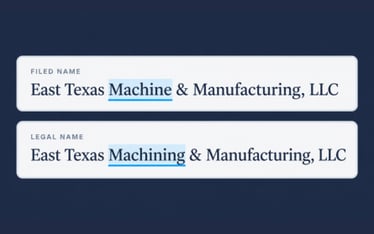
Real world example: How a Texas bankruptcy court voided a $500,000 security interest in 2026 because of a single word error in the debtor's name. Here's what creditors need to know.

Do Mechanic’s Liens Expire? What Happens After
Understand the importance of enforcing your mechanic's lien claim. Learn about deadlines, suit processes, and how to protect your rights effectively.