

UCC Filings Part 3 | Perfection of a Security Interest
Part 3 of our secured transaction series provides an overview of Perfection under Article 9.
Review Part 1 | Introduction & Scope of Article 9 and Part 2 | Conveying a Security Interest under Article 9
What is Perfection of a Security Interest?
Perfection of a security interest is the process where the Secured Party gives notice of the security interest to third parties, which cannot occur prior to attachment.
The Financing Statement
The most common form of perfection is the filing of a Financing Statement. The Financing Statement must include the legal names and principal/headquarters address of the debtor and the Secured Party, identification of the collateral and the state organization number.
Generally, Financing Statements can be used for consumer goods, equipment, farm products, inventory, fixtures, general intangibles, accounts, and chattel paper.
A Financing Statement is effective for 5 years (10 years in Wyoming), and if a Continuation is not filed timely, the Financing Statement will lapse and the Security Interest will be extinguished.
Once the debtor fulfills the obligation, a Termination should be filed.
Where to File a Financing Statement
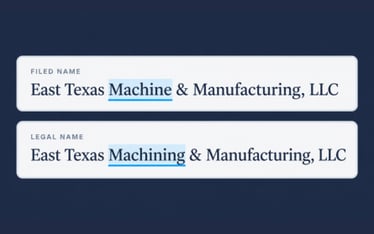
The Financing Statement is filed under the debtor’s name, and the debtor’s name should be as it appears on the public organic record.
Financing Statements, for land-related collateral, are generally filed in the real estate records of the county where the land is located.
The Secured Party must file a Financing Statement in the state in which the Debtor is located. The definition of location may vary based on whether the debtor is a registered or unregistered entity, an individual or foreign entity.
- Registered Entities: including corporations, limited liability corporations and limited partnerships, are deemed to be “located” in the state in which they are incorporated or formed.
- Unregistered Entities: primarily partnerships, are deemed to be “located” in the state in which the organization has its place of business, or if it has more than one place of business, its “chief executive office.”
- Individuals are “located” in their primary state of residence, as indicated on the unexpired driver’s license.
Section 9-307 defines the debtor’s location.
9-307. LOCATION OF DEBTOR.
(b) [Debtor’s location: general rules.]
Except as otherwise provided in this section, the following rules determine a debtor’s location:
(1) A debtor who is an individual is located at the individual’s principal residence, as indicated on the unexpired driver’s license.
(2) A debtor that is an organization and has only one place of business is located at its place of business.
(3) A debtor that is an organization and has more than one place of business is located at its chief executive office.
If a foreign debtor is in a jurisdiction outside the United States, and the jurisdiction does not provide for a public filing system, the debtor is deemed to be “located” in the District of Columbia.
Provincial Construction Payment Rights in Canada
Discover your payment rights on provincial construction projects in Canada, including how to secure bond claim rights and navigate Public Works Act claims.
A Quick Guide to Mechanic's Lien Rights in Canada
Explore the essentials of securing mechanic's lien rights in Canada, including deadlines, notice requirements, and key provincial variations.
Know Your Customer. Protect Your Cash Flow in Any Economy.
Strengthen credit relationships by knowing your customer and using UCC filings & mechanic's liens. Learn how to protect your business in any economy.