


1 min read

What Are Liens on Funds, Stop Notices, and Public Improvement Liens?
A Lien on Funds (in some states referred to as a stop notice or public improvement lien) is a tool available in certain states to help stop the flow of funds on a project until it can be shown that you have been paid.
Serving a lien on funds may halt payment to your debtor or to the general contractor, and in some cases can even require the lender to withhold money.
Though the laws vary by state, one thing does tend to be consistent – the lien on funds will likely bring attention to your non-payment situation.
At first, this may seem counterproductive. You want money to flow down to you, so why would you do something to stop that from happening?
Unfortunately, not all funds continue to flow as they should – especially to those further down the contractual chain. A lien on funds can make an owner or general contractor aware that your customer hasn’t paid you.
Bringing the issue of non-payment to their attention may be what is needed to shake things up in the chain of supply.
Lien on Funds and Public Improvement Lien
These two are similar – lien on funds and public improvement lien. Typically, it’s a lien against the money owed by the Project Owner under contract with the Prime Contractor.
Stop Notice
A stop notice is a notice to party paying for work of improvement of money due, which can obligate that party to withhold sufficient funds to cover noticed amounts.
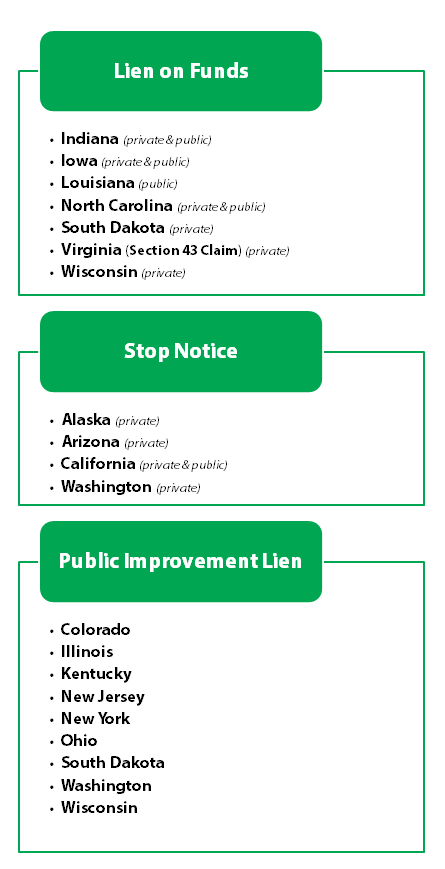
Here’s a quick look at which states offer this type of security!

Lien Index Q3 2026
Lien Index Q3 2026 news: mechanic’s lien activity fell to 47, but bankruptcies, costs, and rates point the other way. See what it means for credit risk.


Colorado's New Lien Law: What it Means for Construction
Colorado's excessive mechanic's lien penalty just changed under SB26-074, with a good-faith safe harbor and new rules on disputed and delay costs.
How UCC Name Errors Become Bankruptcy Risk
Real world example: How a Texas bankruptcy court voided a $500,000 security interest in 2026 because of a single word error in the debtor's name. Here's what creditors need to know.